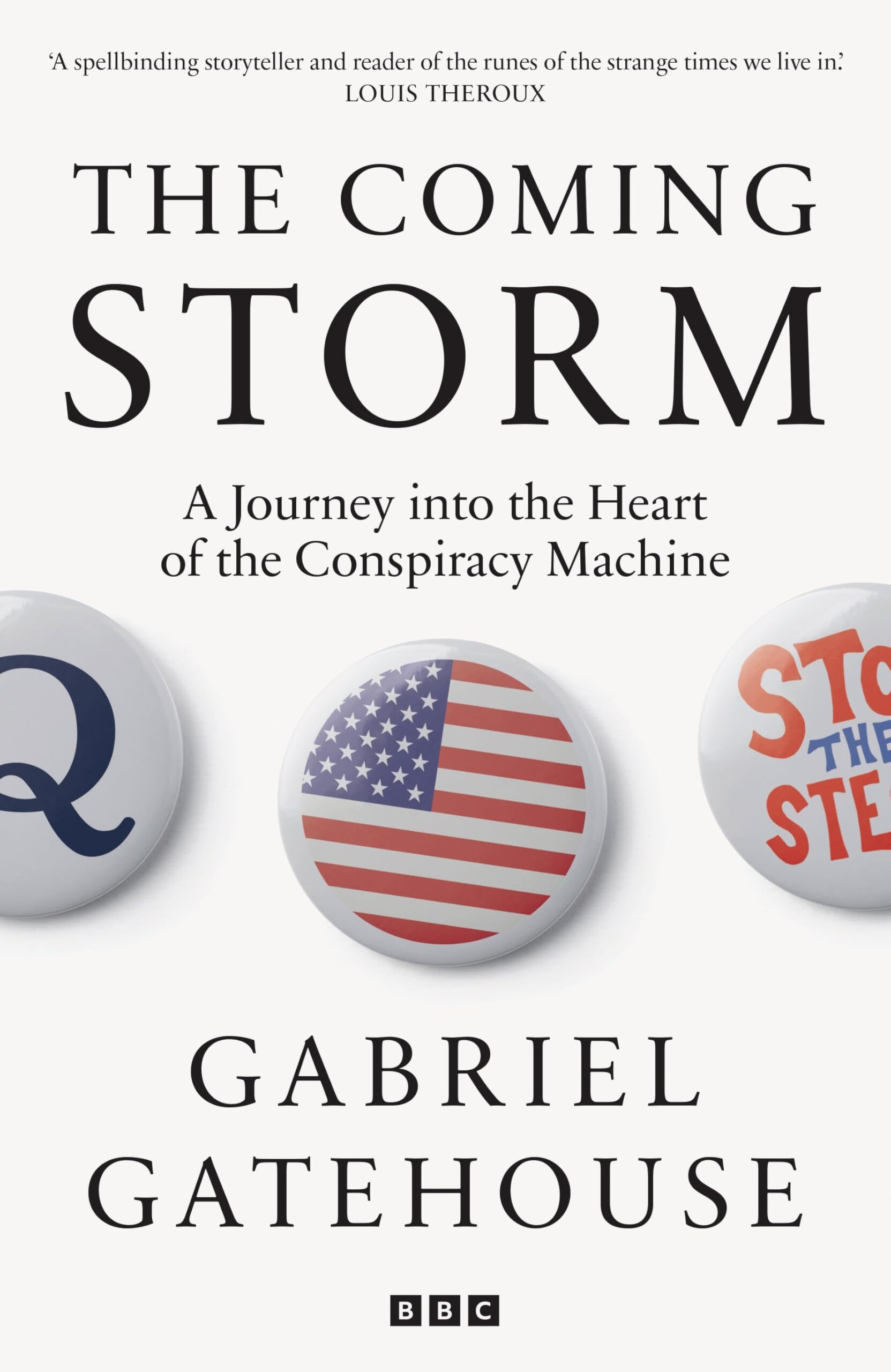
The Coming Storm plots the recent history of the modern day conspiracism that rots our politics today
📚 Finished reading The Coming Storm A Journey Into the Heart of the Conspiracy Machine by Gabriel Gatehouse.
As we all know, modern day politics, and much of the rest of life, has become laden with many often ludicrous conspiracy theories (only some of which turn out to be true).
In this book the author details his take on the history of how we got there in the world of US politics. He starts back in the 1990s where plenty of admittedly less popular theories surrounded President Bill Clinton and his wife Hilary, who of course would go on to be attacked with new ones of her own.
Remember the “Clinton body count” theory of the 1990s? Per Wikipedia:
The Clinton body count is a conspiracy theory centered around the belief that former U.S. President Bill Clinton and his wife, former U.S. Secretary of State Hillary Clinton, have secretly had their political opponents murdered, often made to look like suicides, totaling as many as 50 or more listed victims
Since then conspiracism has moved from the relative fringes to the mainstream of US politics. The book plots the path towards its modern-day culmination as enacted in the January 6th attack on the US Capitol.
Part of the route to brainrotting us all with such paranoia was dependent on recent technologies. Many emerged from internet trolls using message boards such as the infamous 4chan. The whole QAnon movement was one such example, starting off with a 2017 post on 4chan, which had huge impact. Q believers were amongst those who stormed the Captiol.
Arguably at least the more outlandish theories often started off as tongue-in-cheek shitposts but somehow developed such that a vast amount of Americans (and of course other folk, but this book focuses on Americans) believe them to reflect reality. Or at least enough to claim to believe them and take action on them.
Then we have the big social networks who even today are vast conduits of these weird and oftentimes dangerous ideas. One serious problem is that the likes of Facebook, Twitter et al do very little to stop the spread of even the most obvious disinformation. That’s largely because we have allowed a world to develop financial incentives are for them to in fact encourage these emotion-provoking engagement-provoking and hence money-making posts. Mark Zuckerberg gets richer the more we argue about whether the Earth is flat or Hilary Clinton eats babies.
The author, correctly in my view, argues that all this disinformation is not just a waste of time but in fact results in a weakening of trust - in each other, the media, politicians and more - and concomitant weakening of democracies.
A certain type of politician throws petrol onto the fire, doing nothing but encouraging these movements - again because the incentives are there for them to do so.
The book is surely very relevant, and very scary, from an author who has spent a good few years pursuing the subject.