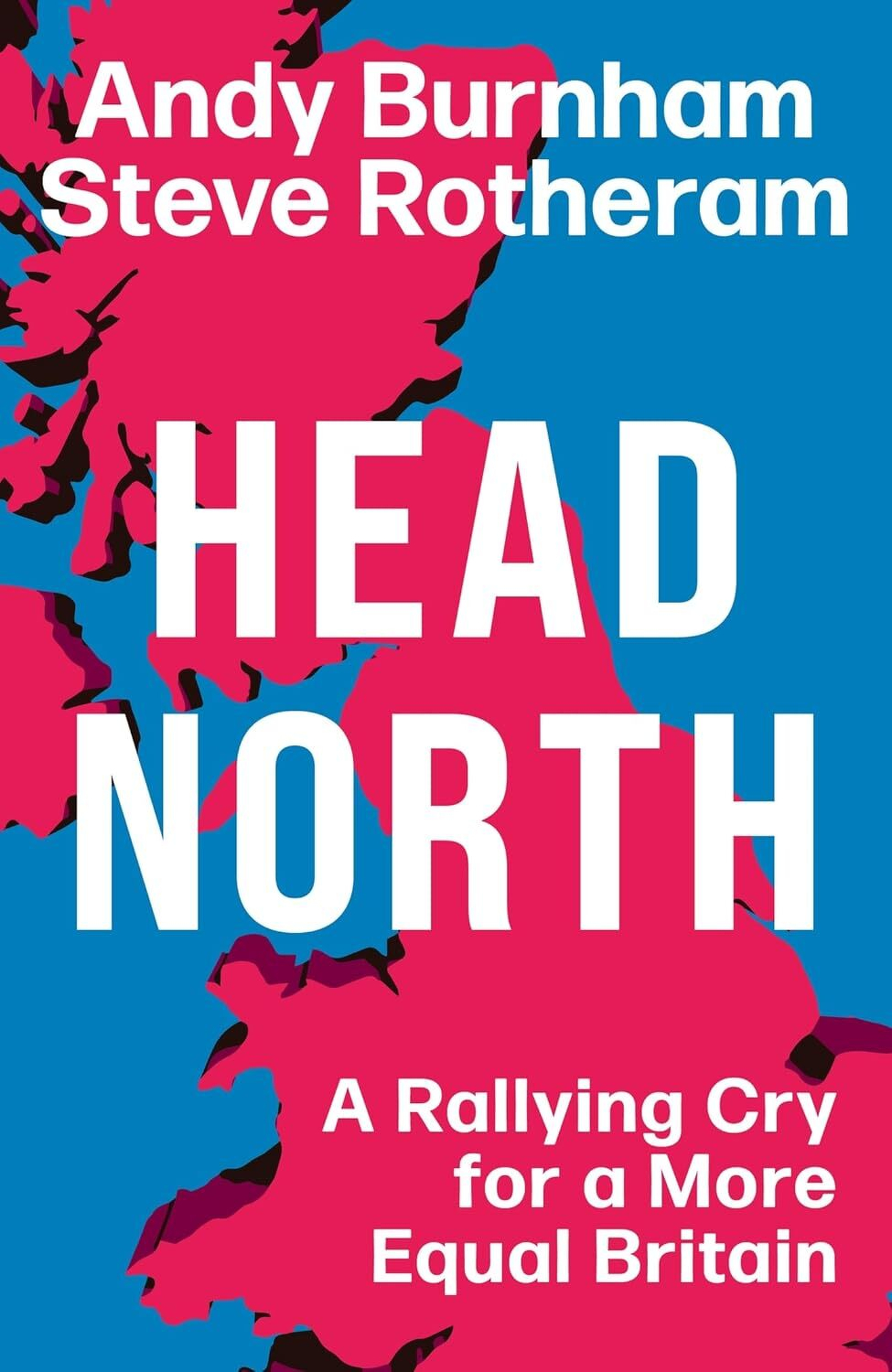
Read Andy Burnham and Steve Rotheram's 10-point manifesto for a better Britain in their 2024 book 'Head North'
📚 Finished reading Head North A Rallying Cry for a More Equal Britain by Andy Burnham and Steve Rotheram.
Having recently won a by-election by a very impressive amount, it seems that Andy Burnham is almost certainly going to be the next Prime Minister of the UK. With that in mind, I set to reading the book he co-authored a couple of years ago whilst he was the mayor of Manchester alongside his colleague Steve Rotheram, mayor of the relatively nearby Liverpool City Region.
The first section of the book is mostly memoir style for both of them. Each author writes a few paragraphs and then the other takes over for a while, identified by the font. Helpfully, their journeys and opinions are not dissimilar. Interestingly, both of them seem to have been (quite fairly) “radicalised” into politics by the corrupt state cover-up of the Hillsborough stadium disaster back in 1989. It was not until nearly 30 years later that, the truth having finally been revealed and accepted by most, anyone was charged with an offence.
Burnham was, famously, an MP in the past. Much of this book is about why the Westminster system is basically corrupt, or at least designed in such a way that actually getting something done to further the goals of the authors - most notably to address the vast inequality between the relatively wealthy city of London and the deprived areas of the north (hence the title…) is absolutely impossible. The seemingly unmodifiable method the government uses to judge the worthiness of new investment, in their eyes, is guaranteed to favour well-off areas every time. And the whole Westminster voting, whipping, etc. system means that even the best intentioned of MPs ends up supporting stuff they vehemently disagree with or is against the interests of the constituents they are supposed to represent. In many ways, the authors' views on Parliamentary-adjacent practice are at times rather in line with former MP Rory Stewart’s.
Eventually Burnham tired of the futility of it all and became instead the mayor of Greater Manchester. He found this position, with its tie to a specific place, to be a much more effective conduit for change, albeit still frequently having to battle central government naysayers. It is thus quite interesting to me how he reconciles his masterful effort to return to Westminster with this. All I can think is that he believes that now he is very likely to be in a position of great power, he can burn down the system and build up something just and effective. Best of luck to him.
In the second half of the book the two authors present their joint manifesto for change. Perhaps it’s worth enumerating it here given one of them is likely to be ruling the country fairly soon. There are ten points to it:
- Britain should have a written constitution - a single legally binding document to protect the rights of citizens and limit governmental power.
- The introduction of a “basic law”. This would be a statute that protects our core rights and protects democracy, designed in a way that any given Parliament of the day could not override. Germany has something like this already. Burnham and Rotheram think a big component of this should be a requirement guaranteeing citizens equal life chances irrespective of where in the UK they are born or live.
- Reform of the voting system: No more first-past-the-post. Switch to some variation of proportional representation.
- Abolish the whipping system in Parliament so MPs can actually choose how to vote themselves.
- Replace the House of Lords with an elected second chamber that is guaranteed to represent all of England’s regions. Something more like the US Senate I suppose.
- More devolution. Similar to the situation with Scotland and Wales, devolve as many powers as possible to England’s cities and regions. Let local mayors make local decisions.
- Reform education so both vocational and academic routes are equally funded and respected.
- A Grenfell law - legislate for and thoroughly enforce building safety standards. There should be corporate accountability and criminal liability for those who do not adhere to them.
- A Hillsborough law - this has two aspects in their view. First, make it illegal for police and other public servants to lie about public disasters. Yes, it is kind of incredible that this isn’t already the case, but apparently it isn’t. Secondly, ensure parity of legal funding for bereaved families bringing court cases against public bodies in these situations. It is clearly unjust for the government to win cases simply because they can afford more expensive lawyers (with public money).
- Use Net Zero to re-industrialise the north. The clean energy revolution we so desperately, desperately need could be an avenue for re-introducing good, well-paid manufacturing and other jobs into the areas of Northern England currently plagued with a lack of quality jobs.
OK, there’s not too much I’d argue against there. I await with a mix of excitement, but perhaps more trepidation, to see what Burnham can do about the above, in the very likely case that he will soon be the leader of the Labour party with, to be fair, a very large majority at present.