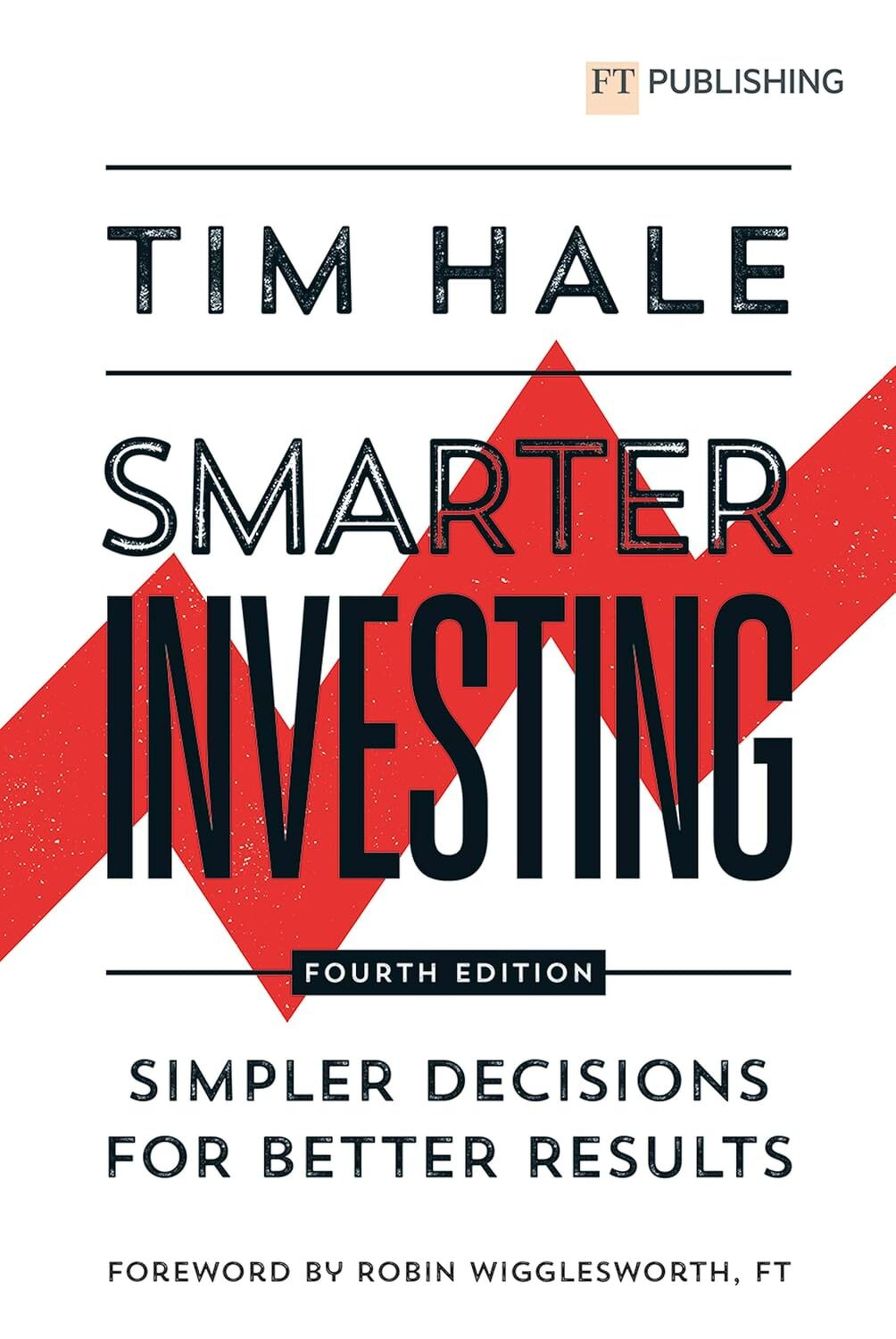
Evidence-based investing guidance from Tim Hale's book 'Smarter Investing'
📚 Finished reading Smarter Investing: Simpler Decisions for Better Results by Tim Hale.
This is the fourth edition of Smarter Investing. It was actually one of the older editions that helped me get going on the pro-investing path back in the day. But since then, temptation has on occasion led me off the Hale path. Nothing disastrous ensued, but nonetheless I figured it’s time to give it another read. Besides, a lot has happened in the world since the first edition
The book was revised in 2023 so of course it doesn’t contain direct reference to the absolute chaotic insanity in the world of economics that we see in very recent times. It knows what a Bitcoin is (his advice: avoid) but it doesn’t know that a tariff-obsessed corrupt baby is in charge of the free world (my advice: avoid).
However, the whole point of the book is: don’t worry about it. Just keep doing the same thing when it comes to investing, and you will - assuming you are not very unlucky - come out on top.
In sum, the idea is that instead of making your own dodgy stock picks and/or paying an advisor to ruin your fortune, you should instead build a low-cost diversified portfolio that is in line with your appetite for risk. Rebalance it now and then so it keeps doing what you want it to. Repeat forever. No new decisions needed. Wait a while. Retire richer than you’d otherwise have been.
Why is this the method of choice? The book contains a lot of evidence around how even the average professional stockpicker returns less profit than the market average, so what chance have I, an uninformed pleb, to do better? Instead, we should use historical evidence to understand the general direction of various markets and their correlates.
The book also goes into the psychology of investing which is where people apparently tend to go wrong. Your worst enemy is: you. Yes, it’s You that tempts you into buying things high and selling them low.
The real practical side of the book is its clear and illuminating guide as to what components your portfolio should consist of, as well as suggesting some funds and ETFs that you might consider for each component.
It can be nearly as simple as you want. Below I’ll pop what I take to be his favoured breakdown of investment components - but he seems open to simplifying it if it seems a lot. Just buying 1 cheap fund to represent “all stocks” and another to represent “bonds” is perfectly compatible with his mindset, and a lot better than what most people do.
But if you want to go all-out Hale, this is what he’s driving at. The risk rating increases as you go up with respect to the “return engine assets”. You pick a column that suits you riskwise and go with that.
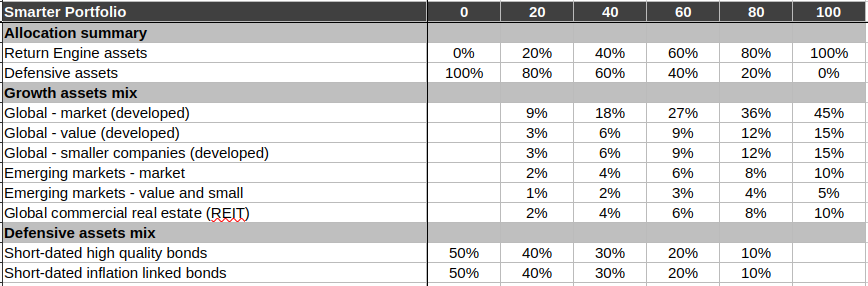
To over-simplify, the “Smarter Portfolio 20” column means you’ve got a 20:80 split between high-performing-but-riskier equity and low-performing-but-less-risky bonds.
But to understand why and how we get to the numbers above, and how to actually go ahead and create the requisite portfolio, you should definitely read the book. It’s not even particularly heavy going. Oh, and I transcribed the numbers in the table above myself, so also it’d be wise to get your hands on the book to double-check I did that correctly.
It’s a British book, meaning the specific funds and ETFs suggested are actually all available to us UKers, which is nice. There’s chapters about if and when you should employ an advisor, the merits or otherwise of sustainable investing and other useful bits and pieces.
It’s a great guide especially for anyone new to investing, but it has important lessons for us all. I am glad to have re-read it. There’s a reasonable chance, should I suddenly stumble across a big pile of money - in this economy!? lol - that I’ll feel more confident about what to do with it.