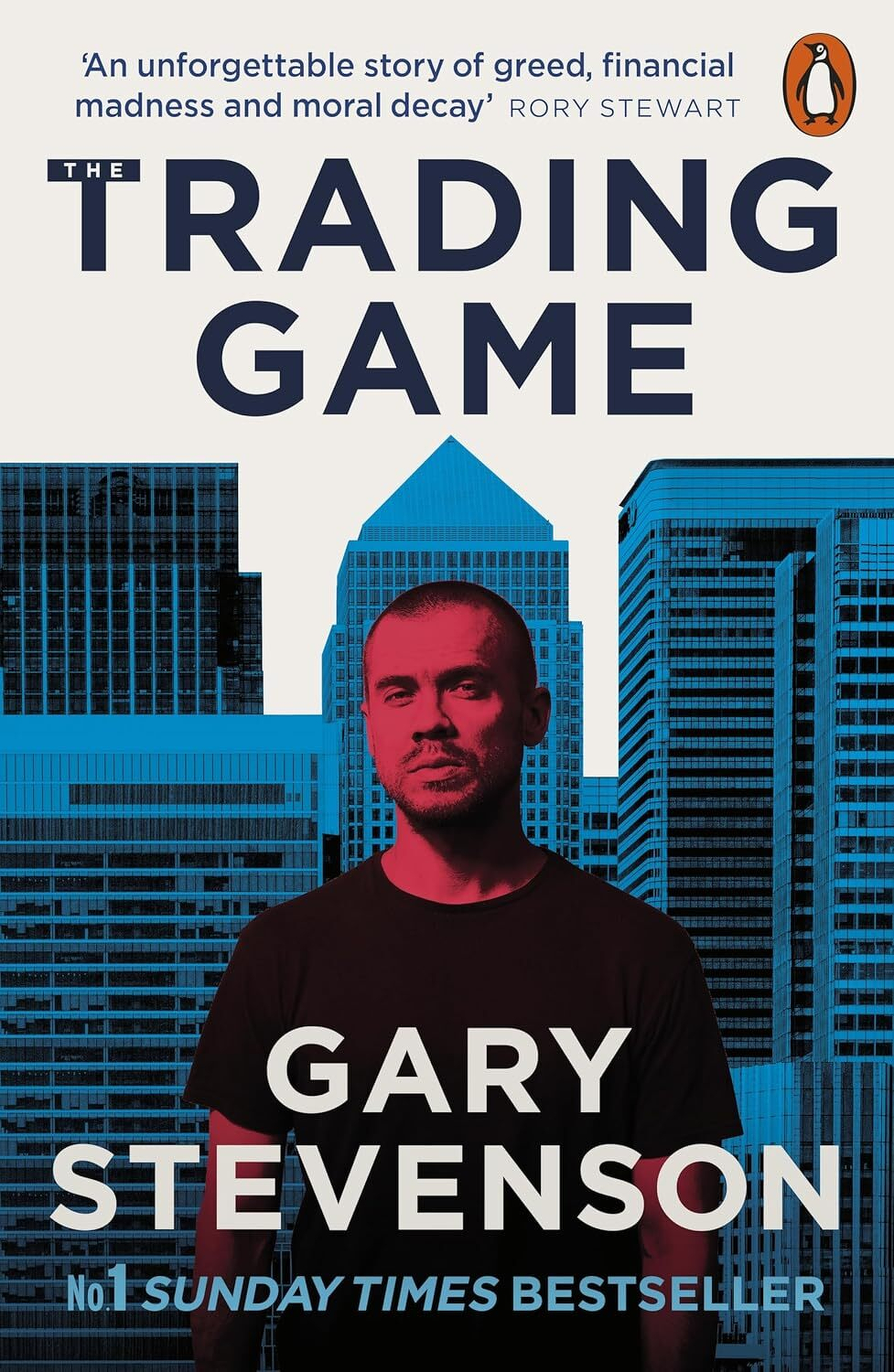
Anti-wealth-inequality campaigner Gary Stevenson shows us how he became so rich - and what it cost him - in 'The Trading Game'
📚 Finished listening to The Trading Game A Confession by Gary Stevenson.
These days I mostly come across Gary Stevenson for his much needed ongoing anti-wealth-inequality, pro tax-the-billionaires campaigning.
Famously, he himself is a rich man, his wealth originating from his surprising career as a (financial) trader in the City of London. This book is his memoir of that period of his life, starting off from his working-class childhood of very modest means through a series of somewhat unlikely events involving him becoming “the most profitable trader at Citibank”.
The book is named after the “trading game”. That was a card game designed to reflect some aspects of financial markets, the winning of which got him a position as an intern in an investment bank. This was, and as far as I know still is, a real rarity for anyone whose parents weren’t already very wealthy and/or having had a private education.
He then goes on to make untold wealth for both the bank and himself, basically by betting on a continuous post-2008 economic crisis being forced upon the everyday person whilst the likes of him-in-his-new-position and his fellow mega-wealthy colleagues got richer and richer. He kept betting on a public economic crisis when the “professional” consensus was the economy would improve.
In particular, he took the unpopular view that historically low interest rates would remain historically low as inequality increased- and he kept winning those bets. As he says, as a trader, if you want to make money, it’s not enough to be right. You have to be right when everyone else is wrong. And this, at least as he tells it, is exactly what the situation was.
We learn a bit about the lifestyles of the average investment banker which is probably about as immoral, decadent and, on occasion, repulsive as you would imagine.
His new-found functionally unlimited wealth does not bring him health and happiness though. His personal relationships fall apart, as does his health, both physical and mental, until betting so successfully on the economic crisis has caused him enough of a personal crisis that he finally realises he’s got to give it up.
His employer, however, has different ideas for him.
The book ends before his rebirth as a pro-equality activist, although the signs are surely there. It’s a rags to riches story; where the riches are exclusively financial and came at a cost that he couldn’t tolerate. But credit is due to the guy for realising the damage that he and his colleagues were doing to the rest of us and subsequently going all-out on the campaign to stop it getting even worse.