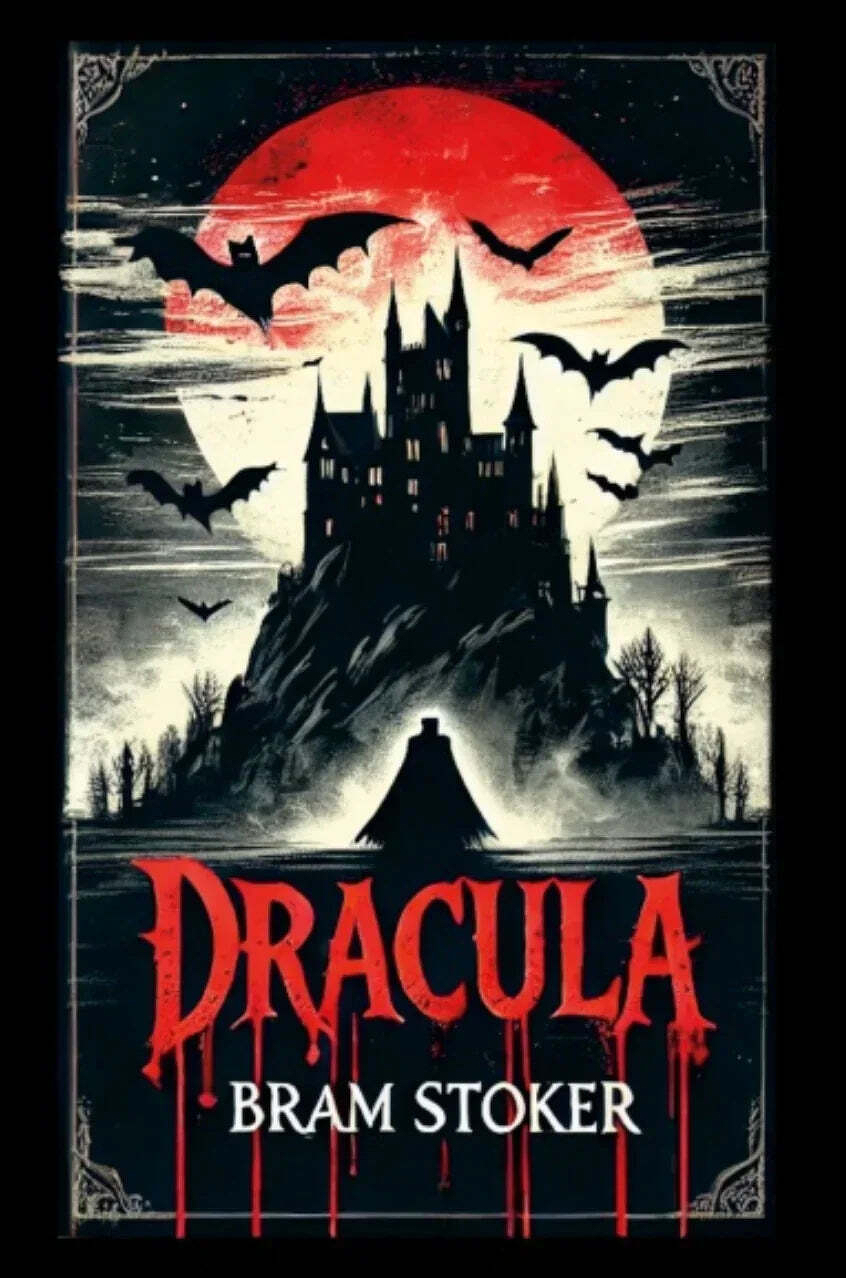
📚 Finished reading Dracula by Bram Stoker.
After watching Dracula: A Love Tale I realised I didn’t know and/or had forgotten the actual original Bram Stoker story of Dracula. Sure, The Count is enough of a blanket cultural artefact these days that I know what he looks like and his distinguishing behaviours. But the plot of the original story this spooky phenomenon was hugely popularised from? Not so much.
Unsurprisingly, it turns out the book is pretty great, self-evidently a classic i(f one can overlook some rather jarring sexism in places - product of its times I’m sure, etc. etc.) . The recent film turns out to have several similarities to it, although the story is deliberately entirely different. The book is very readable, highly gothic-atmospheric and truly scary in places. It’s very clear how it influenced so much of what came later in the genre.
The novel written as a series of diary entries from the various protagonists, and the occasional letter between them or newspaper article. This style I almost invariably love - in book or computer game form - and I did here. I also learned that the phrase for this is “epistolary novel” so that’ll be good for a few book searches later.
Reading the original also satiated my curiosity as to whether the more random behaviours we associate with vampires in general these days - turning into bats, not appearing in mirrors, not enjoying garlic - featured in the 1897 original Dracula vs were a more modern invention. Turns out yes, it’s a faithful representation of Count D.
To be clear though, Dracula was a populariser, not an inventor of the vampire or their famous associations. The general concept is far, far older. As far as we know the term “vampyre” first appeared in published English in 1732 in actual news reports, and, depending on one’s definition, the general concept of ‘vampirism’ may be thousands of years old.