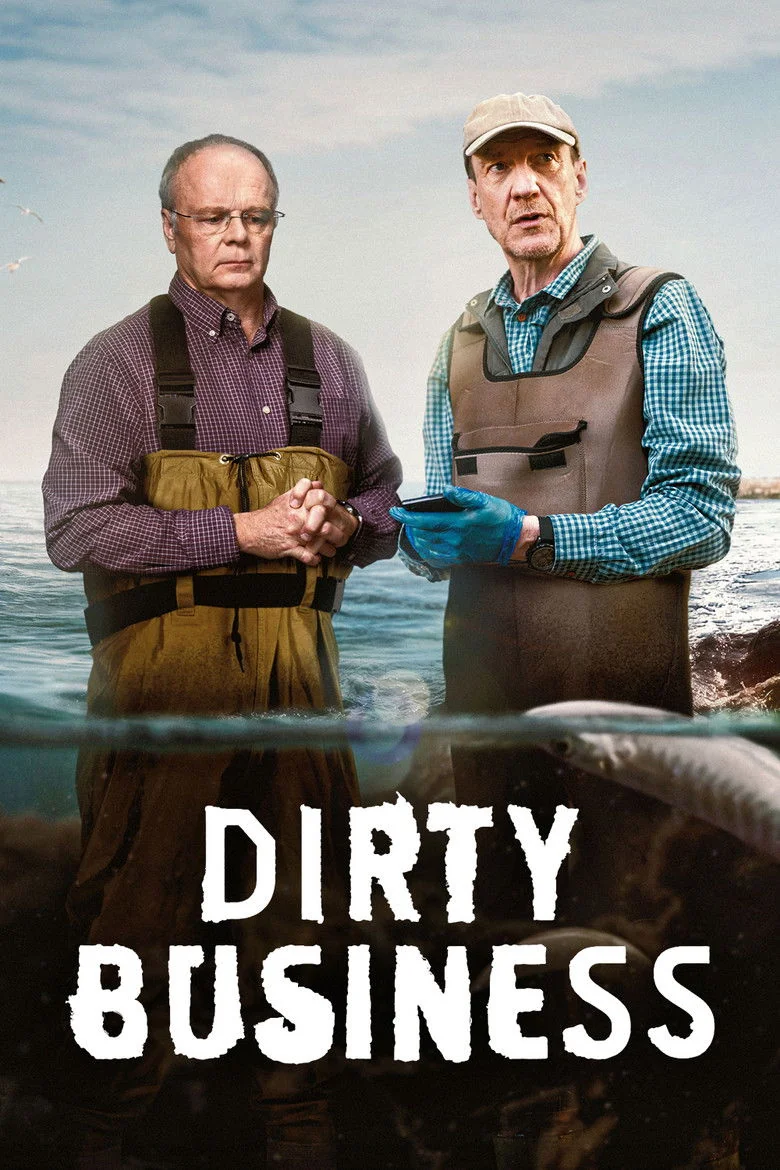
The Dirty Business documentary provides yet more evidence in favour of nationalising water provision in the UK.
📺 Watched Dirty Business.
The was another exemplary documentary about the life-ruining spread of various inappropriate capitalistic and corrupt activities throughout the UK. This time by the monopolistic companies that have somehow been entrusted to provide us the life’s essential that is clean water.
The show follows the true story of a retired detective and a professor who noticed a continual decline in quality of the natural waterways around where they live, and later, the several reports of people allegedly becoming ill through exposure to contaminated water.
They used a combination of IRL investigation and data analysis to expose the criminal negligence of the water company involved and the absolute failure of the Environment Agency to hold them to account, and be involved in building something of a people’s movement along the way.
There are several stomach churning scenes - real-world footage is sometimes included - and tragic occurrences, including the death of a child who caught E coli after playing on a supposedly top-of-the-league-for-cleanliness beach.
It’s absolutely infuriating, oftentimes heart-rending stuff. And hence as essential viewing if one wants to discover the true state of such an important industry as “water” as the famous Mr Bates vs the Post Office documentary was for another sphere of British greed-over-people tragedy. And, data inclined as I am, I’m never upset to see portrayals of folk committing acts of dedicated heroism via spreadsheets.
Corrupt companies maliciously abusing our natural waterways to the determinant of the rest of humanity and the natural world is not a solved problem for us here in the UK. Far from it. Thames Water is probably the company that is currently the most infamous in contemporary Britain for routinely illegally outputting an incredible amount of dangerous sewage into our waterways whilst siphoning off what should be money used to invest in its creaking infrastructure into its shareholders' pockets.
But it’s not unique. As is often the case, it’s an incentive-driven behaviour. As The Conversation notes - “profit drives pollution”.
Since privatisation began, water companies in England have paid out an estimated £76 billion in dividends to shareholders while accruing approximately £56 billion in debts. Dirty Business highlights not only what went wrong with the water industry, but the tactics used to deny, deflect and distract from its poor environmental performance.