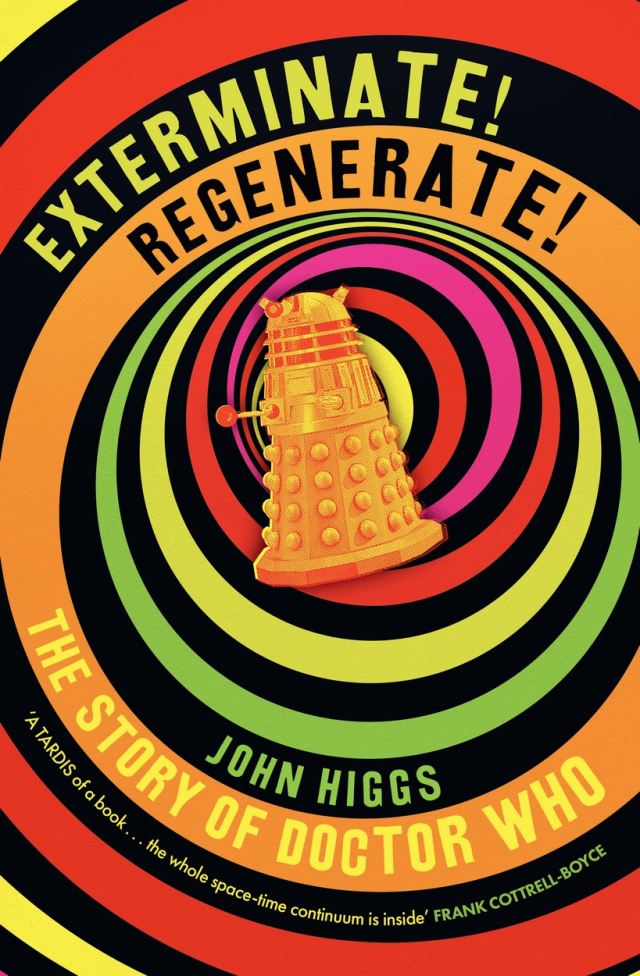
John Higgs presents the illustrious history of Doctor Who in his book 'Exterminate/Regenerate'
📚Finished listening to Exterminate/Regenerate by John Higgs.
This is a book surrounding the history of one of the Britain’s most famous and longest running shows - 1963 through to 2025 so far, and hopefully beyond - albeit one with a hefty gap in the middle of its run.
Running through the Doctors one era at a time it’s mostly about the people and context involved in producing the show rather than its storylines - although some of the major in-show happenings are mentioned, not least to illustrate the challenges of trying to remain self-consistent in a fantastical show that has lasted over 60 years. Apparently they have just about managed to do that on the fundamentals, or at least make some in-show explanations to explain any discrepancies, on all except one matter - the claim back in one long-ago season that Doctor Who himself is half-human. This is now held to be untrue, although it absolutely had to be true for one old storyline to work.
The show was initially produced by Verity Lambert - something of a novelty given in 1963 abject sexism was plenty rife enough that TV production was almost exclusively seen to be a “man’s job”. She was the first female, and youngest ever, drama producer at the BBC back then.
As this book tells is, she’d proved her chops partly by swift and successful action on a previous show, Underground, back in the days where TV drama was usually broadcast live. Basically a play, but on your TV. Hey, historically things like film were far too expensive to bother actually recording one’s broadcast on in advance.
Unfortunately one of the key actors in it, Gareth Jones, died, mid-show. Live is live, so the show had to go on. Without bothering to inform his fellow actors of why their co-star suddenly wasn’t participating in the story, Verity was critical in re-directing the cameras as needed whilst the rest of the team scrambled around to find some way to restructure the show in real-time so the audience didn’t notice anything was wrong.
The rest of the early Doctor Who team also had a much higher level of demographic diversity than was typically the case in the old-white-men-only era of yesterday’s BBC. The same could not necessarily be said for the actors portraying Doctor Who, at least not in older eras. “Never meet your heroes” came to mind at places as the book reveals some of them of those from decades ago to have personally had rather less progressive views and ideas around acceptable behaviour than one might expect of the fictional doctor. Not that even the fictional character was always portrayed as being 100% respectful of, say, women in some of the earlier eras.
Nonetheless, I’m a big fan of the show in general, as are so many other people. And this book is a fascinating telling of its history if you too are interested in the background of what has at least somewhat plausibly claimed by bloggers such as Ben Werdmuller to be “the best show ever made”.